
Technology
Robotic tactile sensing engineered through geometry
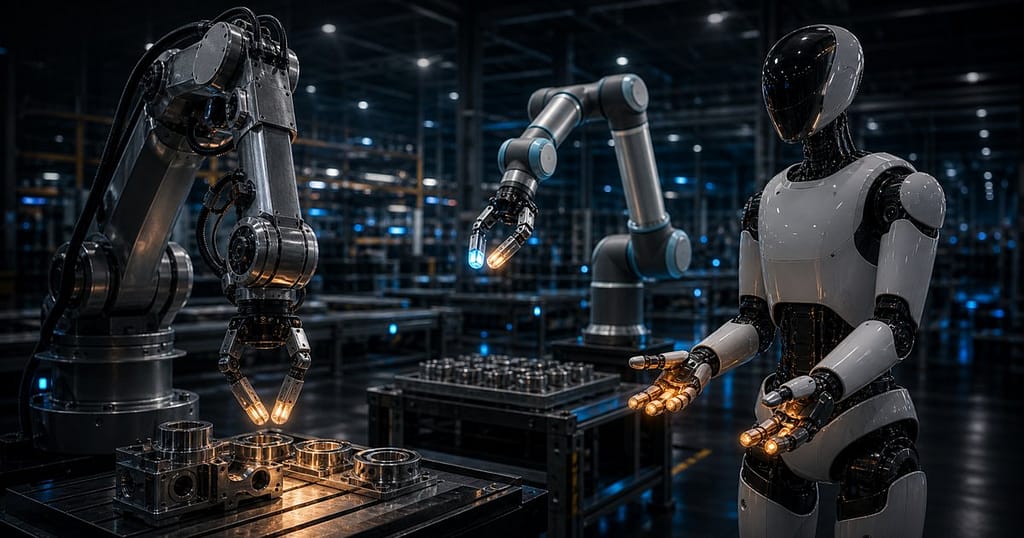
KiriSense develops low-cost tactile sensors for robot fingertips and dexterous manipulation. Its kirigami-inspired geometry encodes normal and shear forces into distinguishable optical signatures. The architecture is designed to provide normal, shear and slip information through compact tactile signals, with low-latency feedback for robot hands, grippers and embodied AI systems.
Contact
Touch begins at the point of interaction
Vision can tell a robot where an object is. Touch provides information about what happens when the robot actually makes contact with it.
Mechanical encoding
Geometry does the sensing
KiriSense uses kirigami geometry as a mechanical encoder. Different loading conditions deform the structure differently, changing the spatial optical response before software interpretation. The physical structure performs part of the sensing function before the readout electronics and control software interpret the signal.
The sensing principle is designed into the mechanical response of the structure, before information reaches the robot’s control system.
Proof of concept achieved
Different interactions. Distinct optical signatures.
Proof-of-concept testing of KiriSense’s technology through its research collaboration with the University of Sheffield has demonstrated deformation-dependent, spatially asymmetric optical responses. Normal loading produces a comparatively centred response, while shear produces stronger directional asymmetry. This provides a route to distinguishing how contact is changing at the sensor surface.
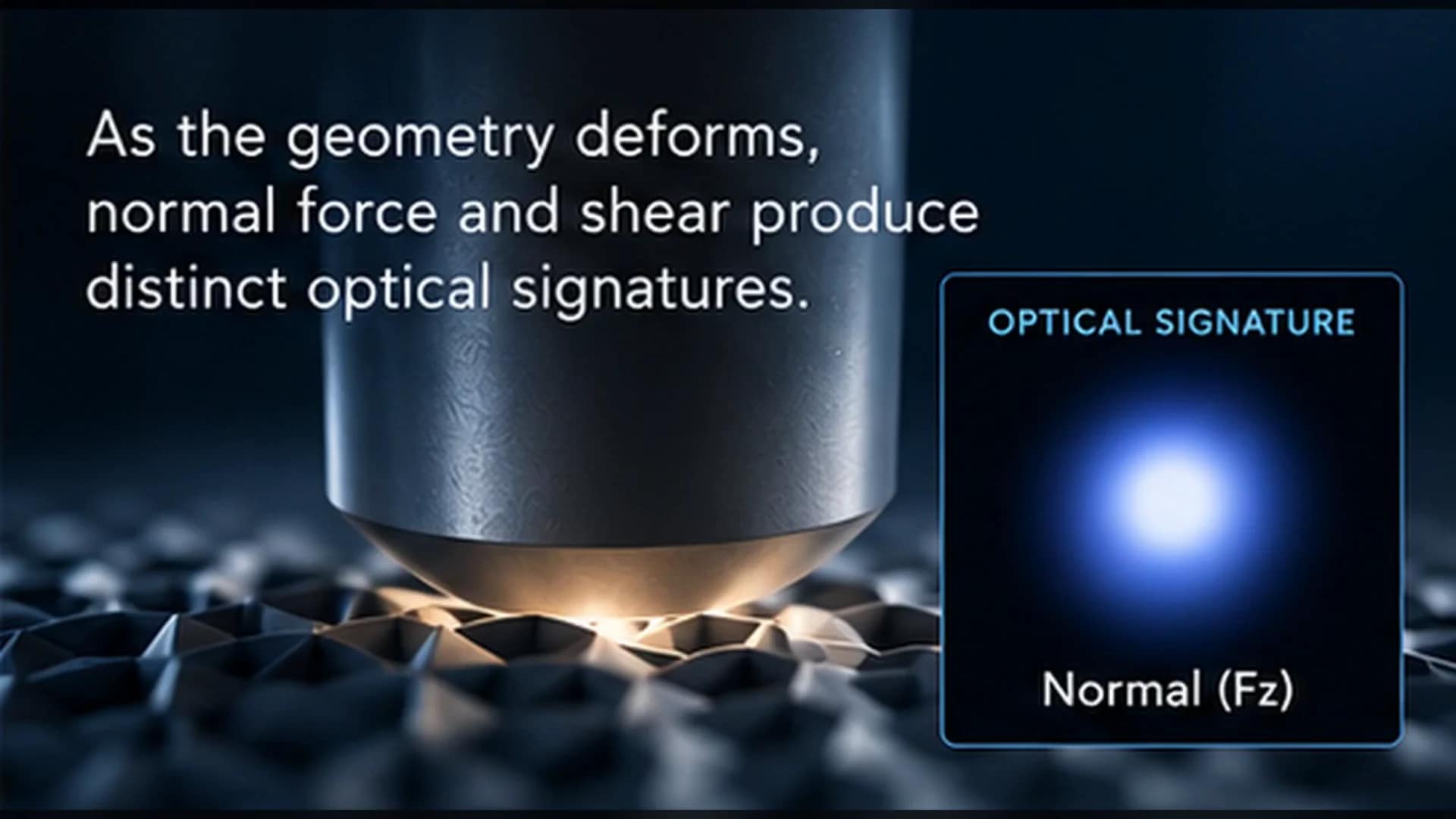
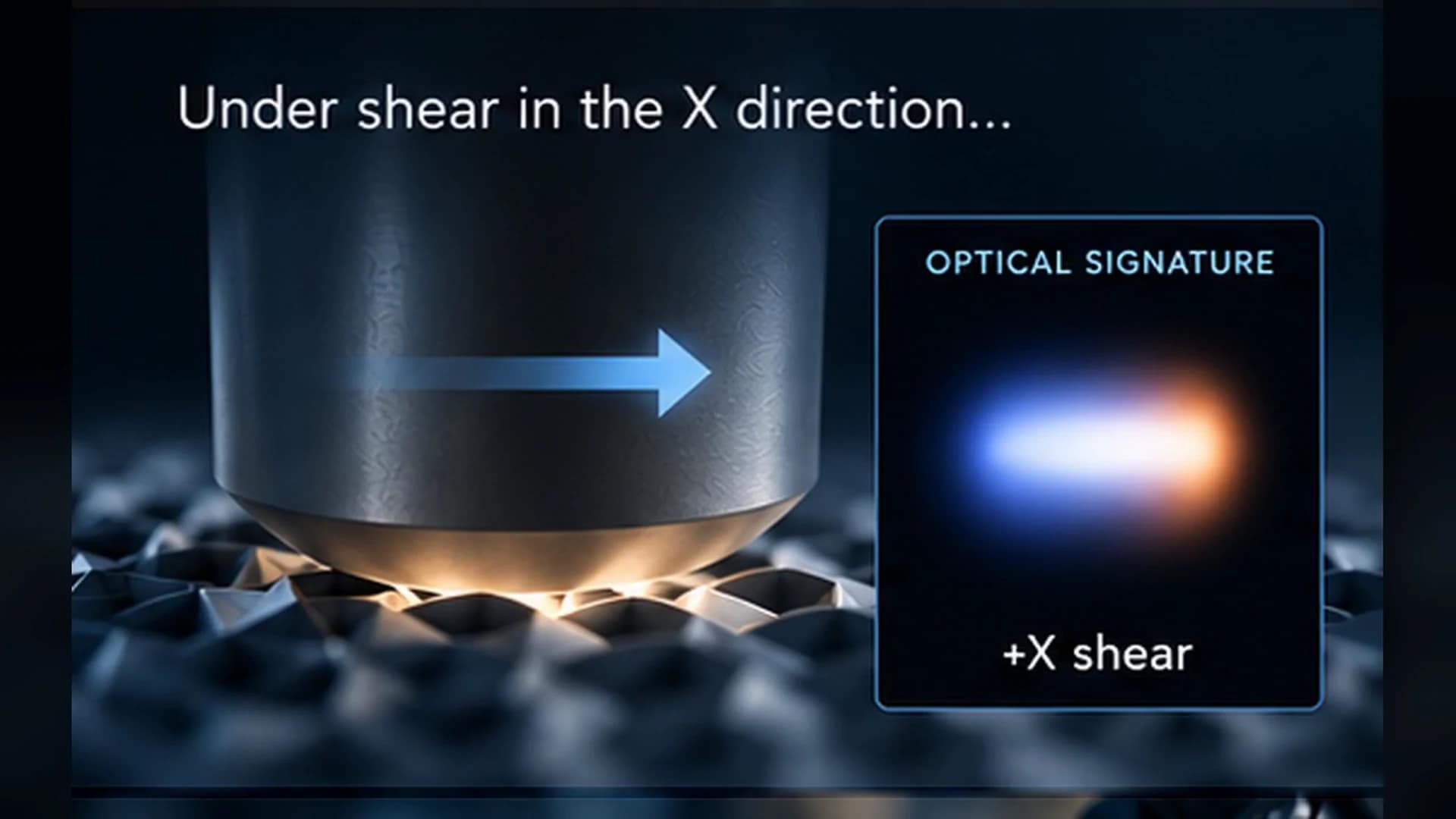
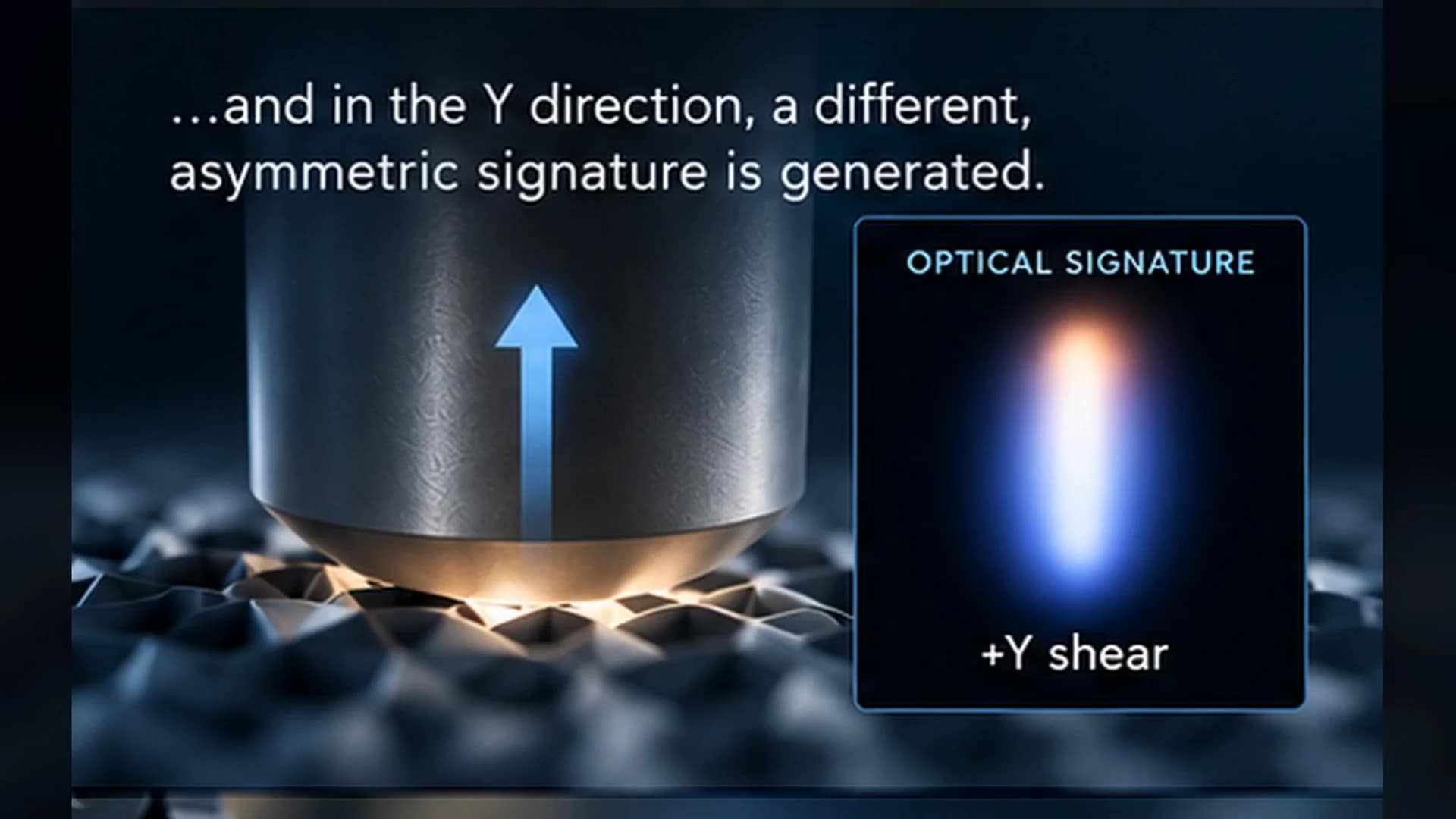
Proof of concept achievedDistinct normal and shear optical responses demonstrated. See our latest proof-of-concept results. The diagrams above illustrate the response patterns.
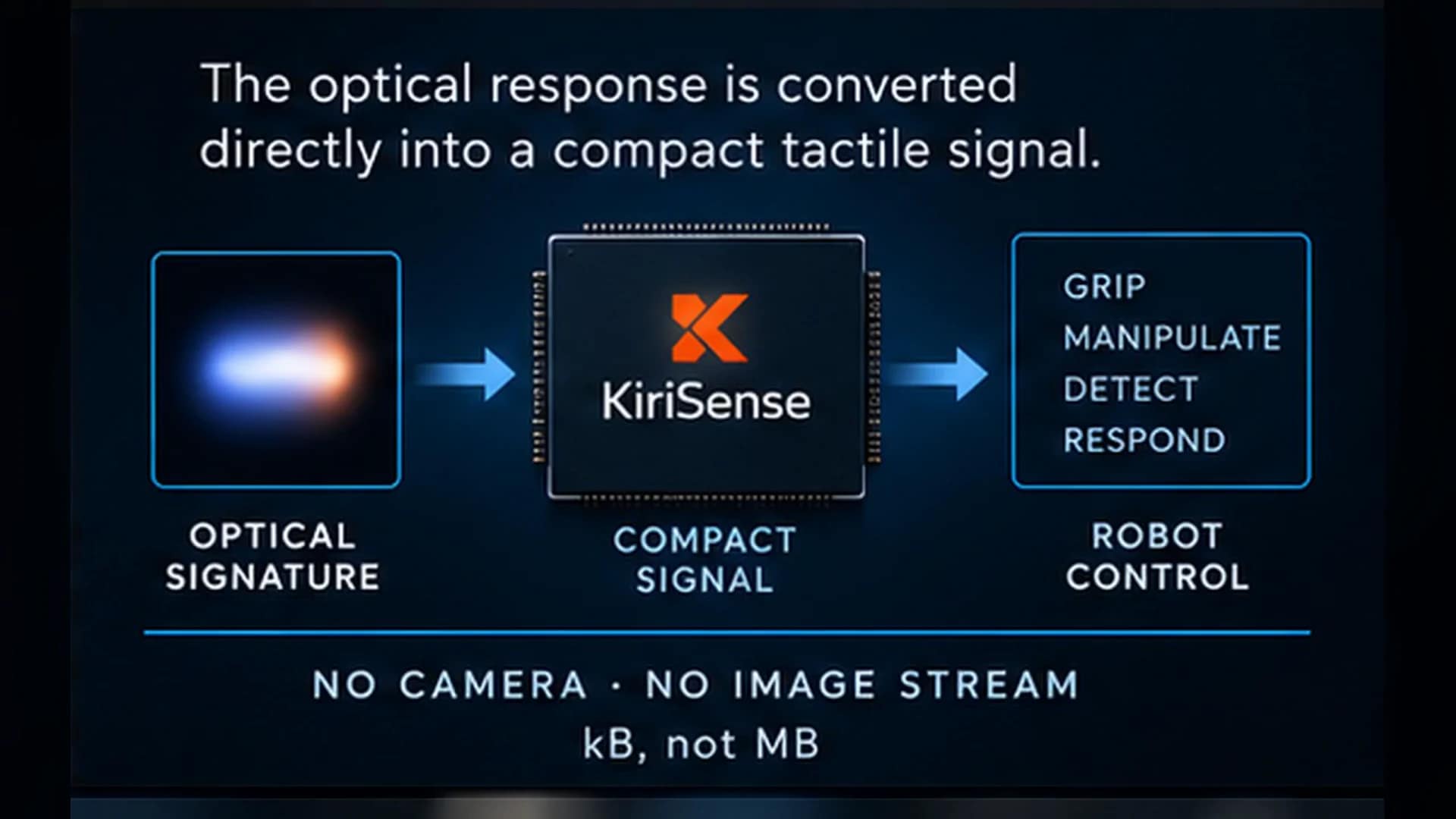
Camera-free architecture
From optical response to compact tactile signal
KiriSense’s architecture does not require a camera or a conventional high-resolution tactile image stream as its primary output. It is designed around compact tactile signals. Image-based optical tactile sensors instead interpret images of a deforming contact surface and can recover rich spatial information.
Geometry encodes useful tactile information before downstream computation. Designed for kB, not MB, KiriSense produces compact tactile signals rather than requiring transmission and processing of a conventional high-resolution tactile image stream. The architecture targets low-latency local feedback, simple electronics and scalable manufacture.
kB, not MB
Designed for compact tactile signals
Development status
From proof of concept to robotic integration
The current programme is focused on turning the qualitative proof of concept into quantitative sensor data, improving electronics and controlled illumination, and preparing the technology for robotic application testing.
Robotic manipulation
Why robots need touch
Robotic tactile sensing gives a robot information about physical contact that cannot always be obtained from vision alone. A camera can locate an object and estimate its shape, but a contact may be hidden inside a grasp. A tactile sensor measures a physical response at that contact, helping a controller assess loading and adjust how a robot hand or gripper holds an object.
Normal force acts approximately perpendicular to a contact surface, while shear force acts tangentially. Normal loading helps describe how firmly a fingertip presses. Shear information describes lateral loading, which matters when lifting, turning or repositioning an object in dexterous manipulation.
Slip is relative movement at the contact. Incipient slip can begin in part of a contact patch before the whole object slides. Normal, shear and slip information help a controller understand contact state and adjust a grasp. Explore how loading and slip relate.
The intended applications include tactile sensing for dexterous robot hands, grippers and humanoid robots. For embodied AI, touch can connect a learned manipulation policy with the physical consequences of an action.
Technical context
Different architectures make different trade-offs
Force and pressure arrays use multiple sensing elements to measure contact across a surface. Depending on their construction, they may use resistive, capacitive or magnetic measurements and can include normal and shear sensing. Their mechanical structure helps determine the information they measure.
Image-based optical systems such as GelSight and DIGIT illuminate a deformable surface and use a camera to observe its response. Images can provide detailed contact geometry and motion information. Their spatial detail and processing requirements differ from KiriSense’s compact-signal proposition.
KiriSense encodes useful distinctions between loading conditions in the mechanical and optical response, with compact readout of those signatures. The physical geometry reduces reliance on detailed image interpretation, creating a distinct route to tactile feedback for robotic manipulation.
A simple, low-data sensor architecture is designed for systems where many fingertips feed a control loop, or where power, wiring and computation are constrained. KiriSense targets useful contact information, low-latency feedback and scalable manufacture for dexterous robots.
Technology provenance
Company-originated IP, externally supported validation
Co-founder Kangsheng Bretherton-Liu developed KiriSense’s underlying tactile sensing technology. KiriSense owns its core technology and patent portfolio. The company subsequently engaged the University of Sheffield as a research collaborator for laboratory testing, characterisation and validation, supported by UK innovation funding through the Henry Royce Institute programme.
Sheffield researchers contribute robotics expertise and laboratory facilities as University employees and research collaborators. Read about KiriSense’s origin and research relationship, or meet the founders and collaborators.
Technical reading
Explore robotic tactile sensing
What robotic tactile sensing adds to vision explains contact sensing and the main architectures. Touch for dexterous hands and humanoids connects fingertip signals with manipulation tasks.
For the mechanics, read normal force, shear force and slip. For readout choices, see image-based and geometry-encoded optical tactile sensing.
Published by KiriSense Ltd · Updated 6 October 2026. Technology lead: Kangsheng Bretherton-Liu.
Selected primary research
Dong, Yuan and Adelson (2017), Improved GelSight Tactile Sensor for Measuring Geometry and Slip; Lambeta et al. (2020), DIGIT; Dong et al. (2018), Maintaining Grasps within Slipping Bound by Monitoring Incipient Slip; Boutry et al. (2018), A hierarchically patterned, bioinspired e-skin. These papers provide the general technical context for the approaches described here.
Work with KiriSense
Put touch to work
KiriSense is working with robotics OEMs, automation partners, researchers and investors as the technology moves from proof of concept towards robotic integration.